Things to Do in Kyrgyzstan
Where the fences ran out and the horses kept going
Top Things to Do in Kyrgyzstan
Find activities and tours you'll actually want to do. Book through our partners -- no booking fees.


Plan Your Trip
Essential guides for timing and budgeting
Climate Guide
Best times to visit based on weather and events
View guide →Day Trips
The best excursions and nearby destinations worth the journey
Explore day trips →Where to Stay
Best neighbourhoods, hotel picks, and booking tips
Find hotels →Travel Insurance
What's required, what coverage matters, and how to get a quote
Read guide →What to Pack
Climate-specific gear, essentials, and what to leave at home
See packing list →When Should You Visit Kyrgyzstan?
Tap a month for weather, crowds, and highlights
View full year-round climate guide →
Your Guide to Kyrgyzstan
About Kyrgyzstan
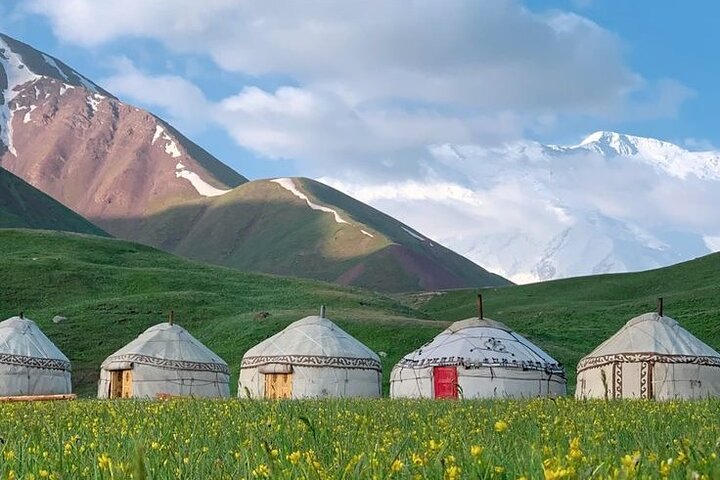
The cold greets you first. Sharp, thin air carries juniper smoke and glacial meltwater from somewhere above the treeline. Kyrgyzstan announces itself through altitude before anything else: Bishkek sits at 800 meters, and within three hours you're at 3,000, watching yurt smoke curl into sky so blue it looks fabricated in photographs.
This is Central Asia's last nomadic country in any real sense, not as museum piece but as living practice, where shepherds still drive herds to the high summer pastures called jailoos and sleep in felt-walled yurts lashed together with horsehair rope. Song-Kul, a lake at 3,016 meters ringed by nothing but grass and horses, has no permanent structures.
The yurt camps appear in June and vanish by September, and the silence at night is the kind that rings in your ears. Issyk-Kul, the massive alpine lake that never freezes despite surrounding peaks holding snow year-round, stretches 170 kilometers end to end, large enough to generate its own weather and warm enough on its northern shore for summer swimming.
The infrastructure is honest about what it is: Bishkek's Osh Bazaar is chaotic and functional, the marshrutkas connecting towns leave when they're full rather than on schedule, and the roads south of Karakol will rattle your fillings loose. English is scarce outside tourist guesthouses. None of this is a reason to skip it.
Kyrgyzstan is the rare place where the difficulty of reaching something is inseparable from what makes it worth reaching, the emptiness is the point, and the reward for a bone-jarring drive over a 3,600-meter pass is a valley where the only sound is wind through grass and bells on a shepherd's mare.
Travel Tips
Transportation: Marshrutkas, shared minivans, usually a battered Sprinter, leave Bishkek's Western and Eastern bus stations when every seat fills, not before. For Issyk-Kul's northern shore, the ride runs three to four hours and costs next to nothing. Shared taxis to Karakol move faster. Negotiate before climbing in. Within Bishkek, the Yandex Go app works reliably and sidesteps the fare theater that drains patience at taxi ranks. For Song-Kul or the remoter valleys, you need a hired driver with a vehicle built for unpaved mountain roads, arrange through your guesthouse, not the bus station, and agree on a round-trip price before you leave.
Money: The Kyrgyz som is the only currency you need. Exchange booths around Bishkek's Osh Bazaar give fair rates for dollars and euros without fuss. Cards work at Bishkek hotels, supermarkets, and nicer restaurants. But outside the capital it's cash only, and smaller denominations, since a yurt-stay host on the jailoos won't break a large bill. Carry more than you think you'll need. The country runs remarkably cheap by any Western measure: a full day of homestay lodging, three meals, and local transport will likely cost less than a single sit-down dinner in most European cities. ATMs exist in Karakol and Cholpon-Ata; don't count on them elsewhere.
Cultural Respect: Kyrgyz hospitality follows a code older than the borders. Remove shoes at the entrance of any home or yurt, accept the tea before discussing anything, and understand that refusing food is a genuine insult. Bread carries particular weight, never place it upside down, never throw it away. Kymyz, the fermented mare's milk offered as an honor in summer, deserves at least a sip even if the sour, faintly fizzy taste catches you off guard. Dress modestly outside Bishkek, around Osh and the Fergana Valley, where communities tend conservative. Ask before photographing people, a hand gesture is universally understood. The welcome runs deeper when you notice the customs.
Food Safety: Beshbarmak, boiled lamb over flat noodles, eaten with your hands, will find you before you find it. Any homestay host serves it within hours of arrival. Street food in Bishkek and Osh is broadly safe: samsa from tandoor ovens with flaky, almost crackly pastry, laghman in a spiced tomato broth thick enough to stand a fork in, and charcoal shashlik where the smoke alone pulls you across the street. Drink bottled water outside Bishkek. Mountain streams carry giardia despite looking pristine. Dairy runs unpasteurized in rural areas, ease in gradually rather than accepting every bowl of fresh kymyz on day one, or your stomach will make its own plans.
When to Visit
Kyrgyzstan cleaves into two nations each year: the frozen one and the one worth the airfare. November to March, Bishkek sits at minus ten Celsius (fourteen Fahrenheit), passes choke on meters of snow, and the jailoos that define the country vanish. Unless you ski Karakol, steep, empty, and laughably cheap against Alpine prices, winter is a hard pass.
Late May cracks the door open. Snowmelt paints the high pastures neon green. Wildflowers spill through the lower valleys. June is gold for hikers who hate crowds: 3,500 m passes are mostly clear, Bishkek hits twenty-five Celsius (seventy-seven Fahrenheit), and guesthouses still charge shoulder rates. Song-Kol's yurt camps pitch in early June. Snow still caps the rim, and the lake looks furious.
July and August rule the calendar. Thermometers touch thirty Celsius (eighty-six Fahrenheit) in the lowlands; Issyk-Kul's north beaches swarm with Kazakh and Russian sunbathers. Even-numbered years host the World Nomad Games: horseback archery, eagle hunts, kok-boru, polo with a goat carcass, brutal and brilliant. Guesthouse prices jump. The Karakol trails to Ala-Kul and Jyrgalan turn into tent villages. Book or carry your own shelter.
September whispers the best secret. Crowds evaporate. Light slants gold through Arslanbob's walnut forests. Mercury hovers at eighteen to twenty-two Celsius (sixty-four to seventy-two Fahrenheit). Rates slide back to spring levels. Passes stay open until mid-October, though snow can slam them shut overnight.
October nails the highlands with frost and gives the last ride to Song-Kul before yurts come down. By late October the gate slams. Come in June for silence, July for fireworks, September for Kyrgyzstan at its kindest, just arrive before the passes lock, because the country that counts sits above the trees.
More Ways to Experience Kyrgyzstan
Tours, day trips, and local experiences curated by on-the-ground operators.
Didn't see anything interesting yet?
Browse Viator's full catalog of tours, day trips, food experiences, and private guides in Kyrgyzstan.
See All Kyrgyzstan Tours on Viator